Gunnera – The monumental leaves of ancient watersides
Botanical identity and origin
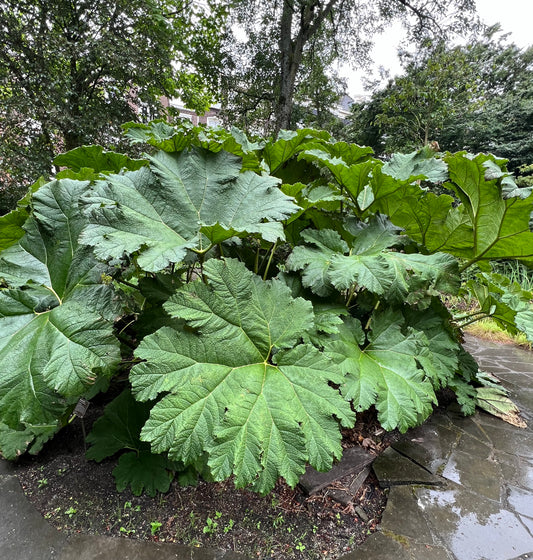
Emerging from temperate rainforest margins and riparian corridors, Gunnera forms one of the most striking herbaceous genera, defined by massive palmate leaves and a rhizomatous crown structure grounded in moist alluvial habitat. Its prehistoric physiognomy, evident in prehistoric foliar scale, reflects an ancient Gondwanan lineage adapted to high moisture and deep organic soils. Species such as gunnera manicata exemplify the genus’s architectural mass, while Gunnera as a whole orchestrates a dialogue between water, shadow, and monumental leaf geometry.
Species diversity and ornamental resonance
Across its range, Gunnera spans contrasting scales: the continental breadth of gunnera tinctoria, the compact alpine tendencies of gunnera magellanica, and the medicinal heritage of gunnera perpensa. Meanwhile, gunnera insignis reveals luminous petiole textures and variable leaf tonality shaped by elevation. These expressions collectively define Gunnera as a genus where architectural petiole frameworks and sculptural foliage integrate with hydric landscapes. Through these varied forms, Gunnera attains a botanical presence that merges mass, translucence, and ecological fidelity.
Cultivation and landscape adaptability
In cultivation, Gunnera requires abundant moisture, deep humic soils, and partial shade that mirrors its moist alluvial habitat. Species like gunnera and gunnera manicata respond to consistent hydration, while massive palmate leaves demand spatial openness. Thus Gunnera settles naturally into water edges, bog gardens, and sheltered woodland designs.
-
Broad leaves capturing diffuse riparian light
-
Petioles rising like prehistoric architectural beams
-
Moist ground stabilizing expansive foliar spread
-
Seasonal dieback harmonizing with hydric cycles
Symbolic synthesis and aesthetic meaning
Ultimately, Gunnera embodies monumentality in motion, balancing aqueous delicacy with exuberant scale. Through species such as gunnera tinctoria and gunnera perpensa, the genus narrates an ancient botanical continuity shaped by water, depth, and shadow. Within this interplay, Gunnera emerges as an emblem of primeval abundance and vegetative grandeur.