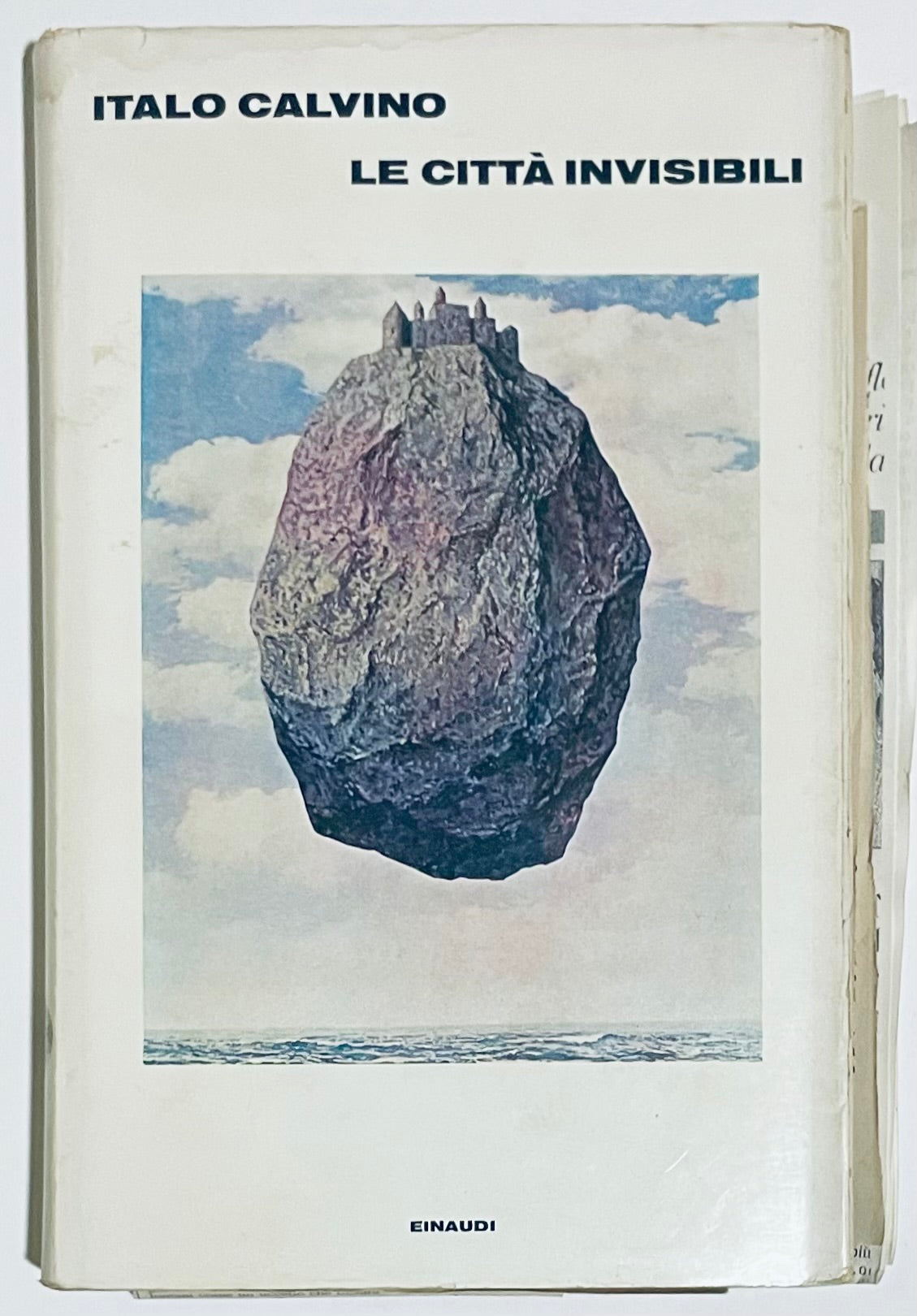
Le città invisibili (1972) by Italo Calvino is a structurally inventive work blending fiction, poetry, and philosophical reflection. Framed as dialogues between Marco Polo and Kublai Khan, the text presents fifty-five imaginary cities, grouped into thematic sections like memory, desire, signs, and exchange. Calvino experiments with non-linear structure: the reader may traverse the chapters in various orders, tracing recurring motifs. The prose combines lyrical description with metaphor; the cities become landscapes of thought, exploring language, desire, memory, identity, the unseen and the visible. It stands as a central work in Calvino’s combinatory period and in 20th-century Italian literature more broadly.