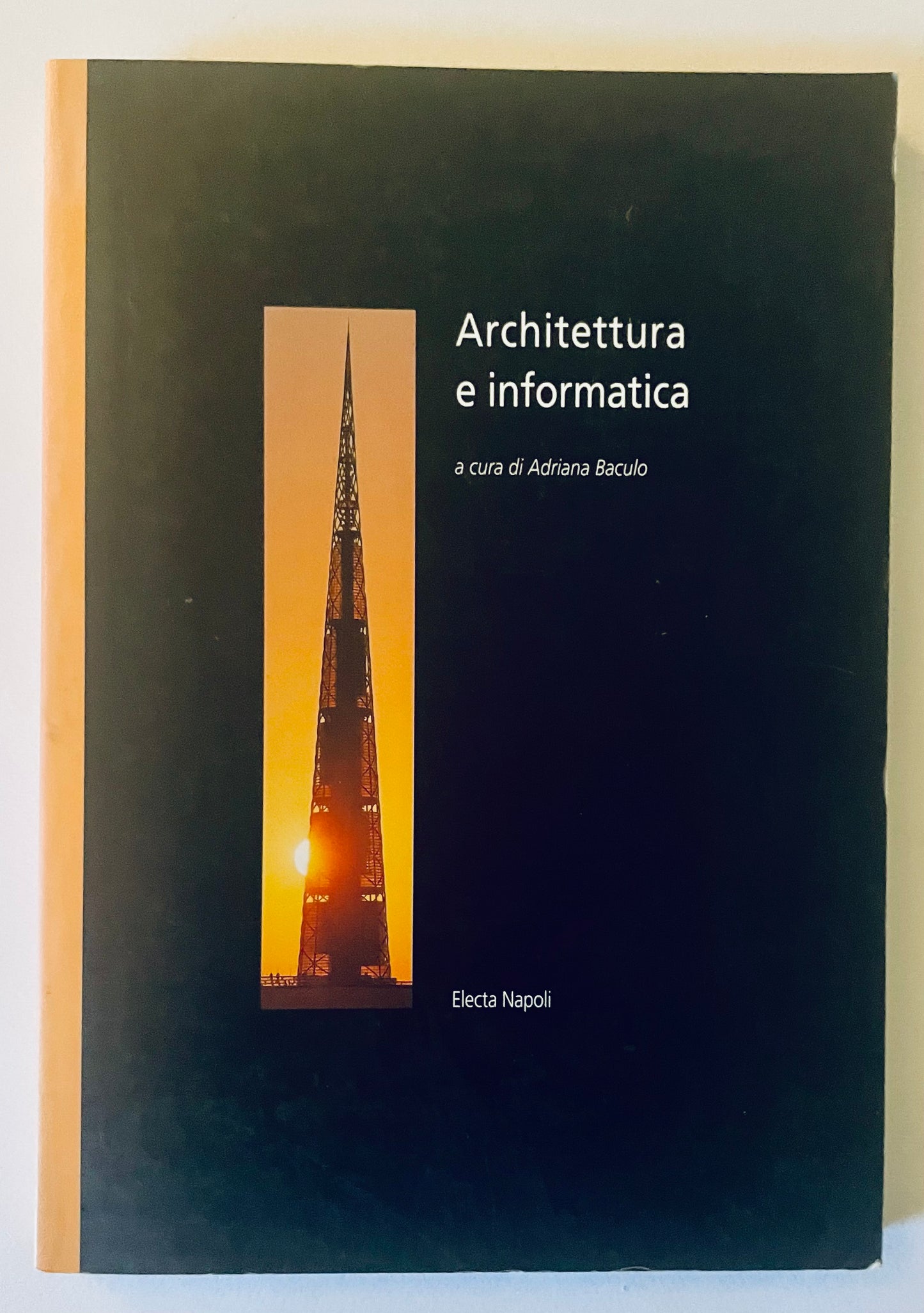
This volume, edited by Adriana Baculo, explores the intersection between architecture and computer science, presenting how computational tools, modelling, digital representation and information technologies reshape the practice and theory of architectural design. Structured around contributions that address geometry, digital fabrication, simulation, data‑driven processes and the evolving relationship between physical built form and virtual environments, the work situates the digital turn in architecture not as a mere auxiliary tool but as a paradigm shift. It offers a critical and historical reflection on how informatics influences spatial form, processual design methods and the visualisation of the built environment. Its contribution lies in bridging disciplinary boundaries, offering architects, designers and researchers a survey of emerging computational methodologies and their implications for design thinking, representation and the architectural object.