Sequoiadendron – Monumental conifers shaped by time
Botanical identity and origin
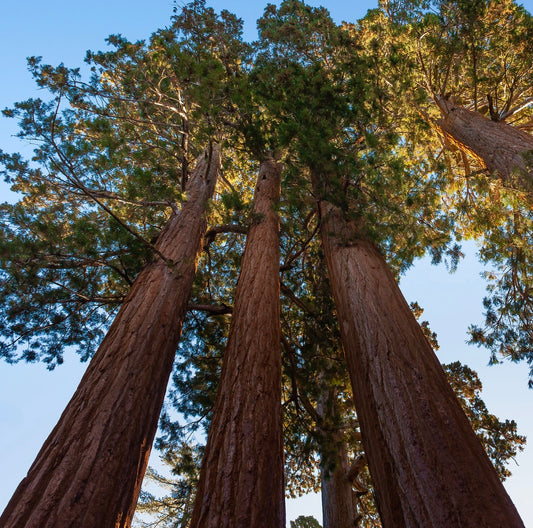
Endemic to the western Sierra Nevada, Sequoiadendron defines an iconic evergreen conifer species restricted to high-elevation montane forests. The single living species, sequoiadendron giganteum, commonly known as the giant sequoia tree, develops a massive columnar trunk capable of persisting for millennia. Protection is provided by fibrous reddish bark, exceptionally thick and resistant to damage. Within environments marked by cool snowy winters and dry summers, Sequoiadendron evolved extreme longevity and structural stability.
Species identity and structural resonance
The genus Sequoiadendron is monotypic, expressing variation through age rather than diversity. Mature trees exhibit scale-like evergreen foliage arranged densely along stout branches. Reproductive cones are relatively small compared to trunk size, reinforcing the contrast between scale and mass. As a long-lived forest tree, Sequoiadendron accumulates presence over centuries, with form defined by gradual expansion rather than seasonal change.
Cultivation and ecological adaptability
In cultivation, Sequoiadendron requires space, deep soils, and cool climates to reflect its native range. A deep anchoring root system supports immense biomass while relying on wide lateral spread rather than taproots. As a fire-adapted conifer, it benefits from periodic disturbance that reduces competition and opens seedbeds.
-
Bark thickening progressively with age
-
Crowns expanding slowly over centuries
-
Cones releasing seeds after environmental triggers
-
Structure remaining stable through snow and wind
Poetic synthesis and botanical meaning
Ultimately, Sequoiadendron conveys a poetics of scale and duration. Through sequoiadendron giganteum, the genus embodies continuity beyond human timelines. Its towering trunks, resistant bark, and ecological dependence on fire render Sequoiadendron a botanical emblem of resilience, patience, and the deep temporal rhythms of mountain forests shaped by climate and time.