Lavandula – Fragrant structures shaped by sun and stone
Botanical identity and origin
Native to sun-exposed rocky soils of the Mediterranean basin, Lavandula develops as a Mediterranean aromatic shrub adapted to heat, wind, and limited moisture. Species such as lavandula angustifolia form compact frameworks with narrow gray-green foliage that reflects light and reduces transpiration. Woody bases support seasonal growth, while foliage remains persistent in mild climates. Within these dry landscapes, Lavandula evolved a growth strategy centered on efficiency, resilience, and aromatic defense.
Species diversity and ornamental resonance
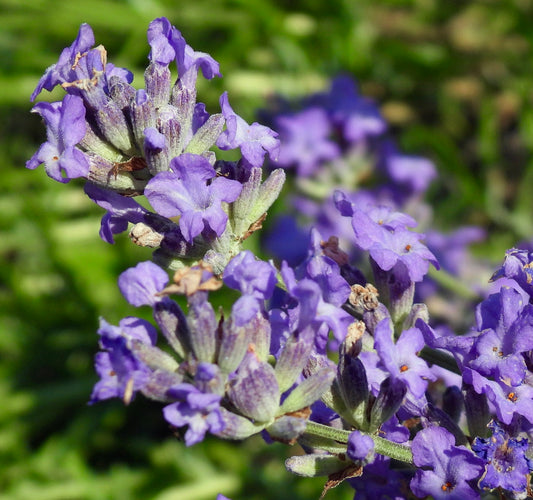
Diversity within Lavandula emerges through floral form, scent profile, and plant stature. Lavandula stoechas is distinguished by ornamental bracts and early bloom, while lavandula x intermedia combines vigor with extended flowering. Across species, upright flowering spikes carry violet to blue flower tones that intensify under full sun. The visual rhythm of summer lavender bloom transforms open ground into textured, chromatic fields defined by repetition and movement.
Cultivation and landscape adaptability
In cultivation, Lavandula thrives in lean, well-drained substrates and uninterrupted sunlight, expressing its identity as a drought-tolerant perennial. The compact woody subshrub form maintains structure year-round, while flowering stems rise above foliage during warm months. These blooms function as pollinator-attracting flowers, reinforcing ecological interaction without altering the plant’s restrained architecture.
-
Spikes lifting color above silver foliage
-
Forms holding shape under heat stress
-
Growth slowing naturally after bloom
-
Structure persisting through dry seasons
Symbolic synthesis and aesthetic meaning
Ultimately, Lavandula conveys a poetics of clarity and restraint. Through species such as lavandula angustifolia and lavandula stoechas, the genus expresses beauty shaped by exposure rather than excess. Its fragrance, form, and seasonal rhythm render Lavandula a botanical emblem of Mediterranean balance, light, and enduring simplicity.