Laurus – Evergreen stillness shaped by Mediterranean light
Botanical identity and origin
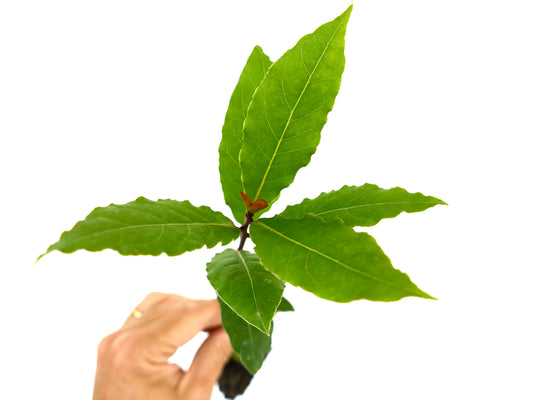
Native to coastal Mediterranean woodlands, Laurus develops as an evergreen Mediterranean shrub or small tree adapted to mild winters and dry summers. The species laurus nobilis forms compact crowns of dense glossy foliage, with leathery aromatic leaves that reduce moisture loss and withstand salt-laden air. Growth is measured and persistent, reflecting a slow-growing evergreen habit shaped by long seasonal stability. Within these landscapes, Laurus evolved as a resilient structural element anchored in shade, stone, and moderated light.
Species identity and ornamental resonance
The genus is essentially monotypic, yet its visual expression varies through habit and management. The classic bay laurel tree develops a naturally rounded form, while trained specimens emphasize vertical clarity and mass. Reproductive structures are discreet: a dioecious flowering system produces small yellowish spring flowers, followed on female plants by black berry-like drupes. These subtle cycles reinforce an ornamental value rooted in texture, permanence, and refined restraint rather than showy display.
Cultivation and landscape adaptability
In cultivation, Laurus thrives in well-drained soils, partial shade, and sheltered positions, expressing notable shade and drought tolerance once established. Its response to pruning allows the creation of formal clipped garden forms, from hedges to sculptural accents, without compromising vitality. The evergreen canopy maintains structure year-round, making it a foundational element in Mediterranean and temperate designs.
-
Leaves maintaining gloss through dry seasons
-
Crowns absorbing filtered coastal light
-
Forms retaining clarity after pruning
-
Growth advancing with quiet regularity
Symbolic synthesis and aesthetic meaning
Ultimately, Laurus conveys a poetics of continuity and composure. Through laurus nobilis, the genus embodies endurance shaped by climate moderation and evergreen discipline. Its persistent foliage and restrained reproductive rhythm render Laurus a botanical emblem of permanence, balance, and cultivated calm.