Kigelia – The suspended fruits of nocturnal savanna light
Botanical identity and origin
Native to African savanna woodlands and riverine forest margins, Kigelia develops as a deciduous tropical tree defined by a broad silhouette and pronounced seasonal rhythms. The sole widely recognized species, kigelia africana, produces compound pinnate leaves that unfold rapidly with seasonal moisture. During dry periods, dry-season leaf drop reduces transpiration, aligning growth with rainfall cycles. Through these traits, Kigelia evolved as a structurally dominant tree adapted to heat, sun, and fluctuating water availability.
Species uniqueness and ornamental resonance
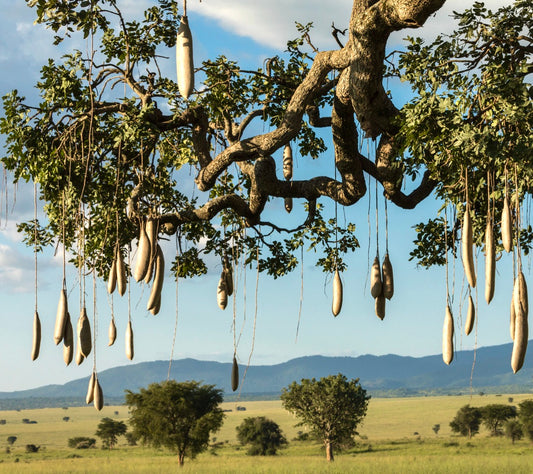
Although monotypic, Kigelia displays a highly distinctive visual identity. The common name sausage tree refers to its large pendulous woody fruits, which hang from long stalks and persist for months. These forms contribute dramatic weight and scale to the spreading rounded crown, transforming the tree into a sculptural focal point. The contrast between foliage, flowers, and fruit defines an ornamental presence rooted more in architecture than in seasonal color.
Cultivation and ecological adaptability
In cultivation, Kigelia requires space, warmth, and deep soils to express its full form, functioning best as a warm-climate ornamental tree. Reproduction is linked to night-blooming tubular flowers adapted to bat-pollinated floral ecology, a strategy reflecting nocturnal savanna dynamics. While flowering is episodic, fruit development is prolonged, reinforcing the tree’s slow, deliberate visual rhythm.
-
Fruits suspended in long vertical arcs
-
Flowers opening after dusk
-
Crowns casting broad, shifting shade
-
Growth responding to seasonal rainfall
Symbolic synthesis and aesthetic meaning
Ultimately, Kigelia conveys a poetics of gravity and night. Through kigelia africana, the genus expresses an equilibrium between mass and suspension, light and darkness. Its hanging fruits and nocturnal blooms render Kigelia a botanical emblem of tropical rhythm, ecological specificity, and sculptural presence shaped by time and heat.