Kalanchoe – Succulent architectures shaped by seasonal restraint
Botanical identity and origin
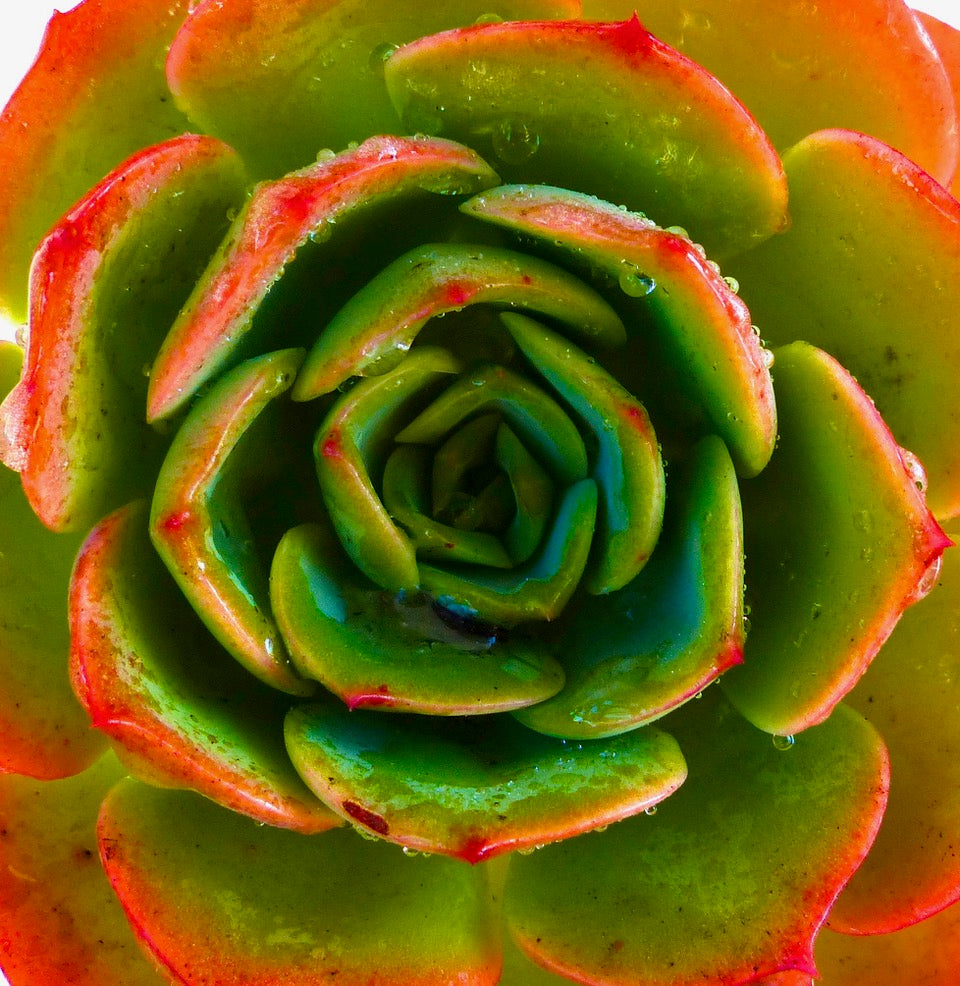
Native primarily to Madagascar dry forest habitats, Kalanchoe belongs to the drought-adapted Crassulaceae, developing compact forms optimized for irregular rainfall and intense light. The genus is characterized by thick water-storing leaves arranged in an opposite leaf arrangement, often forming succulent leaf rosettes or upright, sculptural stems. These structural traits reduce transpiration while maintaining photosynthetic efficiency. Within rocky outcrops and seasonal woodlands, Kalanchoe evolved a growth rhythm aligned with episodic moisture and extended dry periods.
Species diversity and ornamental resonance
Diversity within Kalanchoe appears through leaf texture, plant stature, and floral expression. Kalanchoe blossfeldiana is noted for its bright clustered floral displays, while kalanchoe tomentosa introduces velvety surfaces and muted coloration. Architectural species such as kalanchoe beharensis emphasize bold leaf mass, whereas kalanchoe daigremontiana reveals distinctive reproductive strategies. Across these forms, the genus balances sculptural foliage with seasonal bloom, extending its visual language beyond mere succulence.
Cultivation and landscape adaptability
In cultivation, Kalanchoe responds best to high light, mineral soils, and controlled watering that reflects its native environments. Many species follow a winter to spring flowering cycle, initiating buds under shortening day length. A notable trait is vegetative plantlet formation, where small plantlets develop along leaf margins, enhancing persistence without reliance on seed production.
-
Leaves swelling and contracting with hydration
-
Stems maintaining firm structural angles
-
Flowers emerging during cooler, brighter months
-
Growth pausing naturally under drought stress
Symbolic synthesis and aesthetic meaning
Ultimately, Kalanchoe expresses a poetics of containment and renewal. Through forms such as kalanchoe blossfeldiana and kalanchoe beharensis, the genus embodies adaptation through storage, repetition, and measured flowering. Its balanced architecture and resilient strategies render Kalanchoe a botanical emblem of endurance shaped by light, time, and restraint.