Helichrysum – The silver-bracted echoes of Mediterranean light
Botanical identity and origin
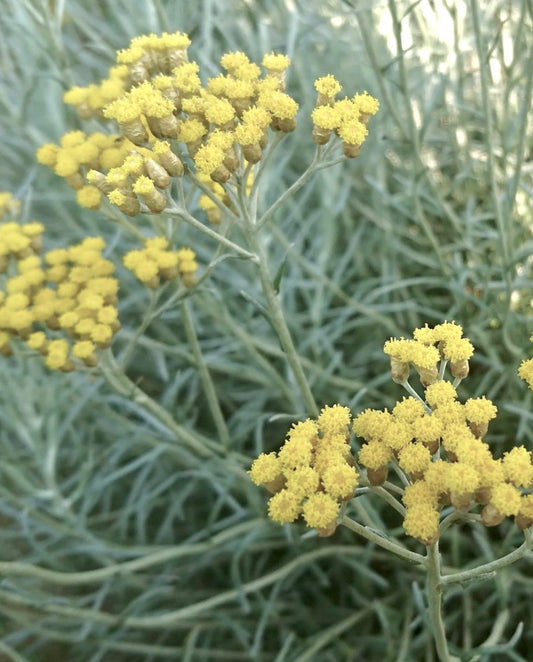
Native to Mediterranean dry slopes and rocky coastal habitats, Helichrysum comprises aromatic shrubs and perennials marked by silver aromatic foliage and finely textured leaves. Its papery inflorescences, often described as everlasting flower plant traits, retain color and structure long after drying. Species such as helichrysum italicum express a resinous leaf chemistry adapted to drought, wind, and solar exposure. Within these environments, Helichrysum forms rhythmic cushions and branched subshrubs that trace gradients of heat and mineral soil.
Species diversity and ornamental resonance
The genus Helichrysum includes luminous forms like helichrysum stoechas, airy textures characteristic of helichrysum arenarium, e varianti note come helichrysum angustifolium. The well-known curry plant helichrysum italicum accounts for much of the genus’s aromatic recognition. Across species, papery golden bracts frame small central florets and catch oblique light throughout the warm season. Their chromatic clarity and sculptural persistence establish Helichrysum as a nuanced contributor to dry gardens and coastal plantings.
Cultivation and landscape adaptability
In cultivation, Helichrysum responds to porous soils, full sun, and low to moderate irrigation aligned with its native xeric ecology. The sun-loving helichrysum species thrive in exposed settings where airflow and sharp drainage enhance leaf silvering and aromatic intensity. Growth patterns vary from mounding to lightly upright forms, while fine resinous leaf scent reinforces seasonal presence.
-
Silver leaves reflecting intense summer light
-
Bracts retaining color beyond bloom decline
-
Cushioned forms stabilizing rocky ground
-
Aromatic surfaces interacting with warm air
Symbolic synthesis and aesthetic meaning
Ultimately, Helichrysum embodies a poetics of durability and luminosity. Through species such as helichrysum italicum and helichrysum stoechas, the genus articulates resilience rooted in arid landscapes. In its persistent bracts and subtle aromatic signatures, Helichrysum stands as a botanical emblem of continuity, dryness, e radiant summer clarity.