Grevillea – The filamented nectar forms of southern landscapes
Botanical identity and origin
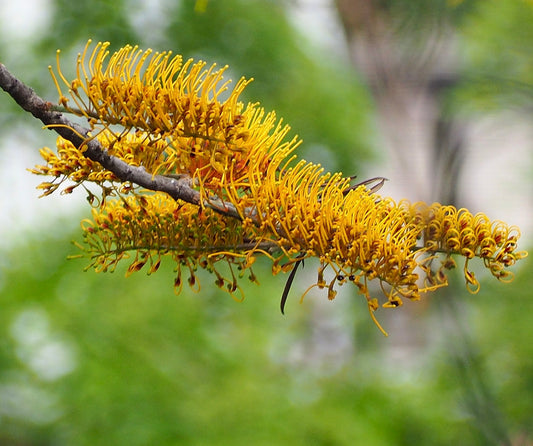
Emerging from Australian heathland habitat, Grevillea constitutes a diverse lineage of Proteaceae marked by fine divided grevillea foliage and distinctive filamented blooms. These structures channel light and airflow with equal finesse, while nectar-rich spider flowers attract birds and insects across dry slopes and coastal plains. Species such as grevillea robusta exhibit tall arboreal forms, whereas other members of Grevillea favor shrubby, ground-hugging growth shaped by sandy soils and intermittent rainfall.
Species diversity and ornamental resonance
The genus Grevillea showcases striking variation: luminous grevillea moonlight, compact grevillea coastal gem, and richly saturated grevillea superb each articulate unique chromatic and structural qualities. Meanwhile, grevillea long john extends narrow, upright foliage, and grevillea mt tamboritha introduces dense, textural forms ideal for low plantings. Species such as grevillea lanigera, grevillea noellii, and the widely recognized grevillea silky oak underscore the genus’s breadth. Across these expressions, Grevillea blends fine texture with vibrant ecological presence.
Cultivation and landscape adaptability
In cultivation, Grevillea thrives in well-drained soils, sun exposure, and low to moderate irrigation reflecting its native terrain. Forms like grevillea superb respond with sustained flowering under warm light, while grevillea moonlight extends luminous bloom cycles into cooler seasons. The genus’s adaptability supports uses in mixed dry borders, habitat plantings, and architectural gardens where texture and nectar availability enhance spatial rhythm.
-
Filamented flowers catching angled light
-
Shrubby forms stabilizing sandy slopes
-
Upright varieties creating sculptural contrast
-
Evergreen textures enriching arid palettes
Symbolic synthesis and aesthetic meaning
Ultimately, Grevillea embodies a poetics of filament, nectar, and sunlit geometry. Through forms such as grevillea moonlight and grevillea coastal gem, the genus expresses resilience shaped by heat, wind, and mineral soils. In its fine foliage and radiant blooms, Grevillea stands as a botanical emblem of southern clarity and ecological vibrancy.