Botanical identity and origin
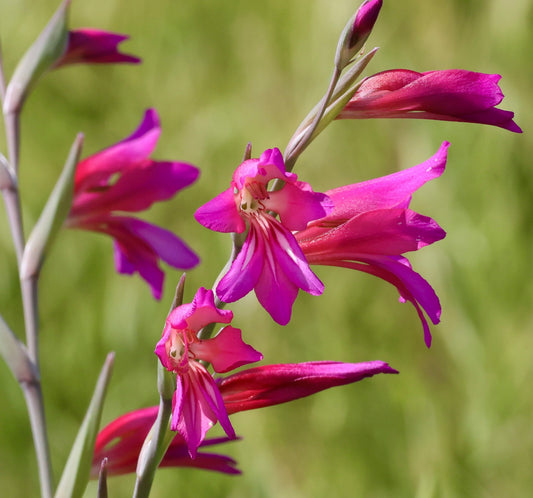
Native to a broad South African origin species complex, Gladiolus forms upright herbaceous structures defined by sword-shaped foliage and rhythmic flowering sequences. Its summer-blooming corms store energy through seasonal cycles, enabling rapid vertical emergence as temperatures rise. The characteristic gladiolus flower reveals funnel-shaped forms arranged along tall inflorescences that respond dynamically to light. Across grasslands, fynbos regions, and cultivated settings, Gladiolus inhabits ecological spaces shaped by fire regimes, drainage patterns, and shifting climates.
Species diversity and ornamental resonance
The diversity of Gladiolus spans forms known collectively as gladiolus flowers, displaying vivid arrangements that include purple gladiolus, yellow gladiolus, and red gladiolus, each articulating distinct pigment pathways. Garden hybrids echo ancestral species through variations in height and bloom density. Meanwhile, traits such as gladiolus leaves and branching textures modulate compositions of both subtle and saturated color fields. These factors allow Gladiolus to structure borders and meadow-style plantings with seasonal clarity and vibrant chromatic punctuation.
Cultivation and landscape adaptability
In cultivation, Gladiolus thrives in well-drained soils, full sun, and irrigation aligned with its active summer phase. Gardeners often consider whether are gladiolus perennials, recognizing that corm survival depends on climate and winter protection. Their tall gladiolus spikes integrate elegantly into mixed arrangements, providing vertical rhythm and luminous contrast.
-
Upright spikes catching high-summer light
-
Leaves forming linear architectural accents
-
Corm-driven renewal shaping seasonal arcs
-
Color fields deepening toward late summer
Symbolic synthesis and aesthetic meaning
Ultimately, Gladiolus expresses a poetics of ascent, where color, form, and rhythm converge in seasonal celebration. Through tonalities such as purple gladiolus and yellow gladiolus, the genus reveals an interplay between structural precision and expressive bloom. In its vertical silhouettes and luminous palette, Gladiolus stands as a botanical emblem of summer elevation.