Gasteria
Gasteria includes forms such as gasteria little warty, gasteria armstrongii, gasteria batesiana, gasteria acinacifolia, gasteria carinata, and variants known as ox tongue plant, cow tongue plant, and lawyers tongue plant. Defined by succulent tongue-shaped leaves, mottled leaf patterns, and shade-tolerant succulent growth, Gasteria echoes its South African rocky habitat through sculptural stillness and nuanced texture.
-
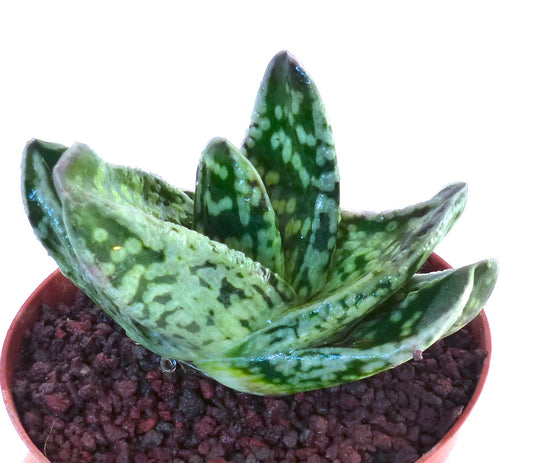
Gasteria armstrongii cv 硬い肌 (Katai hada) 15cm | Armstrong's gasteria | Armstrong gasteria
Regular price €95,00Regular priceUnit price / perSale price €95,00Sold out -
Gasteria armstrongii cv 硬い肌 (Katai hada) 3cm | Armstrong's gasteria | Armstrong gasteria
Regular price €50,00Regular priceUnit price / perSale price €50,00Sold out -
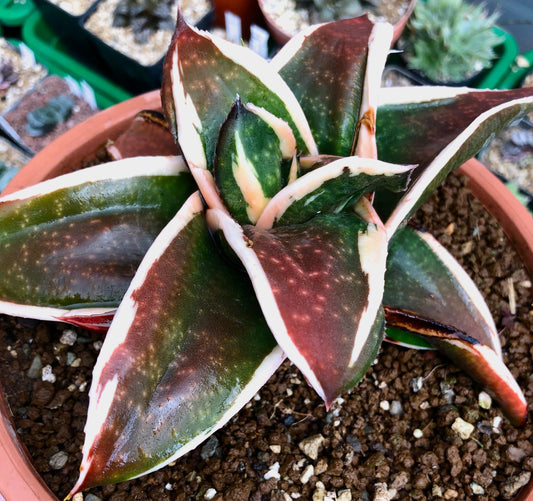
Gasteria cv GAGYU-RYU NISHIKI white variegated 25cm | Ox tongue | Lawyer's tongue
Regular price €123,50Regular priceUnit price / perSale price €123,50Sold out -
Gasteria cv GAGYU-RYU NISHIKI white variegated 5cm | Ox tongue | Lawyer's tongue
Regular price €65,00Regular priceUnit price / perSale price €65,00 -
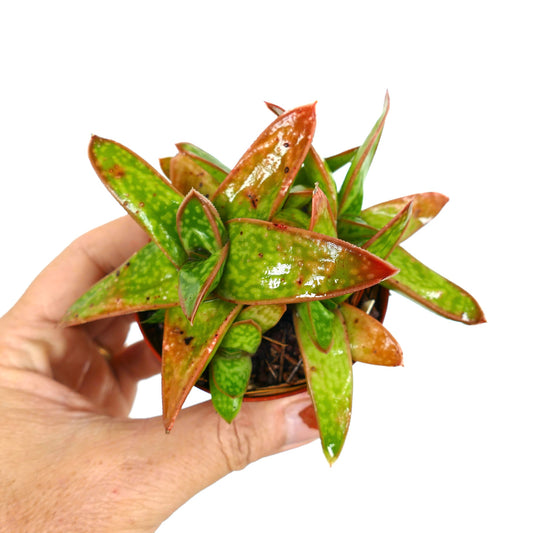
Gasteria cv MUMBA (ex Specks Nursery EXOTICA) 20-26cm | Ox tongue | Lawyer's tongue
Regular price €28,50Regular priceUnit price / perSale price €28,50Sold out -
Gasteria cv MUMBA (ex Specks Nursery EXOTICA) 4-10cm | Ox tongue | Lawyer's tongue
Regular price €15,00Regular priceUnit price / perSale price €15,00 -
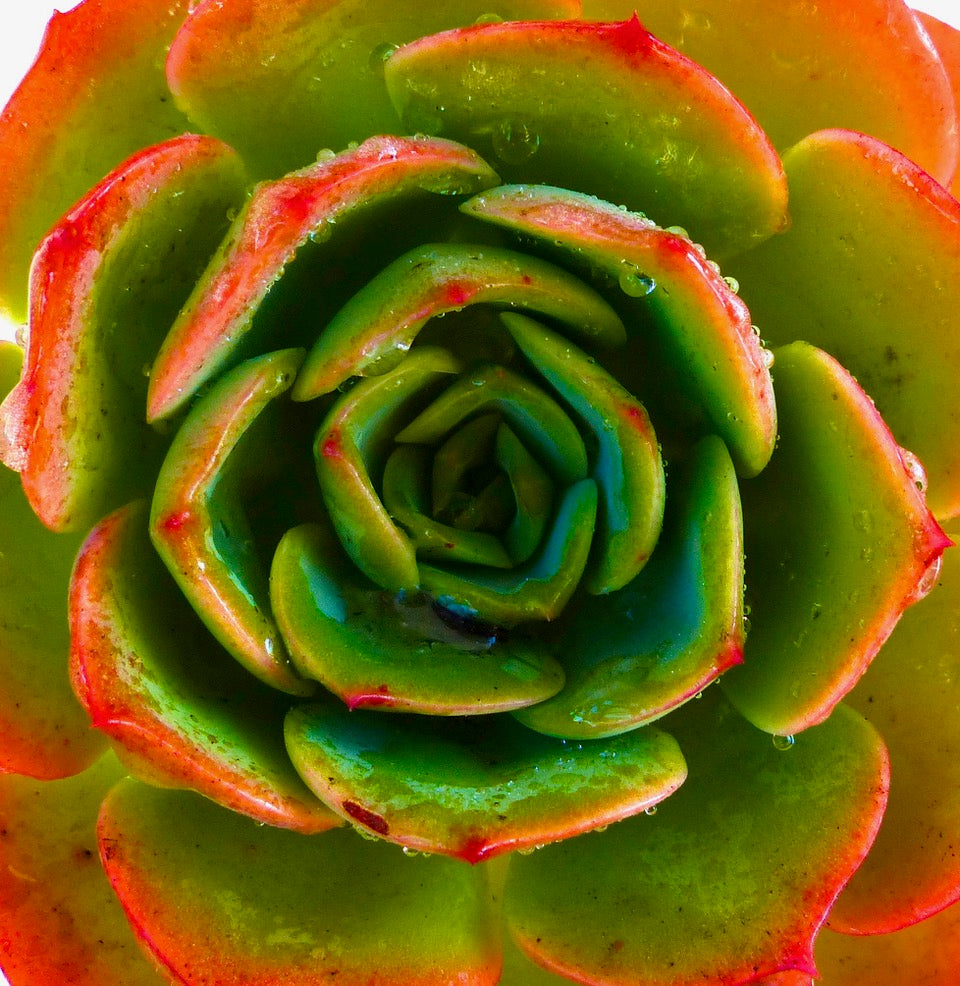
Gasteria cv 風白 Fūhaku WHITE VARIEGATED 10cm | Ox tongue | Lawyer's tongue
Regular price €19,00Regular priceUnit price / perSale price €19,00Sold out -
Gasteria cv 風白 Fūhaku WHITE VARIEGATED 2cm | Ox tongue | Lawyer's tongue
Regular price €10,00Regular priceUnit price / perSale price €10,00
Gasteria – The mottled tongue-leaf sculptures of shaded deserts
Botanical identity and origin
Native to South African rocky habitat, Gasteria forms compact succulent structures adapted to shade, drought, and mineral soils. Defined by succulent tongue-shaped leaves, rough textures, and subtle mottling, the genus modulates light absorption and water conservation with remarkable precision. Species such as gasteria armstrongii illustrate the ability of Gasteria to anchor itself in crevices where filtered light and limited moisture guide slow, deliberate growth. Across shaded ravines and cliff bases, Gasteria reveals a sculptural botanical identity.
Species diversity and ornamental resonance
The diversity of Gasteria spans small, textured forms like gasteria little warty, with raised tubercles catching oblique light, and broader-leaved types such as gasteria acinacifolia. Meanwhile, gasteria batesiana and gasteria carinata introduce distinct mottled leaf patterns, where dark greens and silvery patches articulate micro-geometries across the surface. Common names such as ox tongue plant, cow tongue plant, and lawyers tongue plant reflect long, tapering leaves characteristic of many species. Through these forms, Gasteria balances mass and delicacy in shaded desert niches.
Cultivation and landscape adaptability
In cultivation, Gasteria thrives in gritty substrates, low-to-medium light, and measured irrigation rhythms aligned with its shade-tolerant succulent growth. Species like gasteria little warty respond well to interior placement where indirect light enhances leaf texture, while forms such as gasteria acinacifolia adapt to outdoor xeric settings. As a slow-growing genus, Gasteria stabilizes rock gardens, container compositions, and shaded alcoves.
-
Leaves catching soft lateral illumination
-
Mottling shifting with seasonal hydration
-
Compact rosettes sculpting quiet spatial rhythm
-
Subtle textures echoing mineral surfaces
Symbolic synthesis and aesthetic meaning
Ultimately, Gasteria embodies a poetics of subtlety and resilience, where muted tones and rugged surfaces converge. Through species like gasteria armstrongii and gasteria batesiana, the genus expresses endurance shaped by scarcity, shade, and stone. In its understated geometry and textural depth, Gasteria stands as a botanical emblem of quiet adaptation and sculptural calm.
Collections
-
Books & Readings
Books and Readings: Discover the World of Plants Through Pages Why Read...