Fitzroya – The millennial sentinels of Patagonian rainforests
Botanical identity and origin
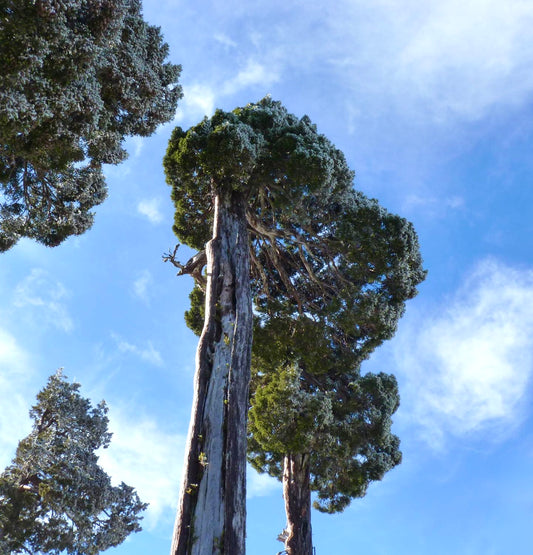
Native to the southern Andes habitat and Chilean temperate forests, Fitzroya embodies an ancient conifer lineage marked by evergreen conifer foliage, immense stature, and slow, deliberate growth. Known also as patagonian cypress, the genus withstands cool, humid climates where cloud-laden air sustains deep soils and moss-laden substrates. Species such as fitzroya cupressoides represent one of the longest-lived trees on Earth, whose millennial-age tree rings reflect climatic rhythms, volcanic events, and centuries of ecological stability.
Species diversity and ornamental resonance
Although monotypic, Fitzroya reveals remarkable internal variability, ranging from young pyramidal forms to the monumental profiles of ancient alerce trees. Vernacular expressions such as alerce fitzroya and the broadly used fitzroya tree highlight its sculptural silhouette and cultural resonance. Through its towering straight trunk, fibrous bark, and muted green tonality, Fitzroya communicates a restrained yet commanding presence. Seasonal moisture patterns accentuate this quiet dynamism, situating Fitzroya within a continuum of rainforest textures and forms.
Cultivation and landscape adaptability
In cultivation, Fitzroya requires high humidity, cool temperate rainforest conditions, and soils rich in organic matter. Its slow-growing conifer species nature demands patience, while consistent moisture supports steady root development. The species’ decaying-resistant wood contributes to structural longevity, making Fitzroya a stabilizing element within cool, sheltered plantings.
-
Bark fibers absorbing mist-laden air
-
Tall silhouettes guiding vertical composition
-
Evergreen tones anchoring shaded clearings
-
Growth rings recording centuries of atmosphere and light
Symbolic synthesis and aesthetic meaning
Ultimately, Fitzroya embodies endurance, serenity, and geological memory. Through forms like patagonian cypress and alerce fitzroya, the genus narrates the long arc of climatic history across Andean slopes. Its monumental stature and ancient chronology make Fitzroya an emblem of forest continuity—an organism in which time becomes visible, layered, and quietly luminous.