Diospyros

The Diospyros genus, including Diospyros kaki, virginiana, and nigra, spans edible and ornamental beauty—from golden persimmons to the deep tones of ebony wood. Thriving in sunny, fertile soils, these evergreen or deciduous trees bear fruit and form that balance delicacy and endurance. Symbolic of wisdom and longevity, Diospyros embodies the meeting of sweetness, strength, and timeless botanical artistry.

Diospyros – The trees of ebony and golden fruit

Botanical identity and ancient lineage

The genus Diospyros, part of the Ebenaceae family, encompasses over 700 species of trees and shrubs distributed across tropical and temperate regions of the world. Its name, derived from the Greek for “divine fruit,” reflects the dual nature of the genus—fruit-bearing persimmons and ebony-yielding trees. From the forests of Asia and Africa to the woodlands of North America, Diospyros unites elegance, endurance, and utility in a lineage that bridges both art and sustenance.

Species diversity and cultural significance

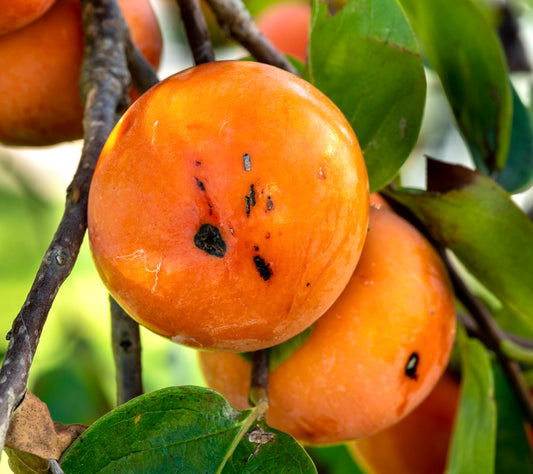
Among its most celebrated members, Diospyros kaki, the Japanese persimmon, offers glossy foliage and amber-orange fruit prized for sweetness and ornament. The American persimmon (Diospyros virginiana) carries the same charm in a wilder form, its fruit ripening after frost into rich, honeyed pulp. Diospyros nigra, or black sapote, yields a chocolate-colored fruit known as “chocolate pudding fruit,” while Diospyros lotus, the date plum, has been cherished since antiquity. Beyond its edible species, Diospyros ebenum, the source of ebony wood, stands as a symbol of permanence and craftsmanship. Together, these species define a genus where nourishment and artistry coexist.

Cultivation and horticultural traits

Diospyros thrives in well-drained, fertile soils and full sun, preferring warm climates though several species tolerate frost. Its lustrous, leathery leaves and smooth bark lend ornamental structure even when not in fruit. Trees may take years to mature, rewarding patience with beauty and longevity. Fruiting species like D. kaki and D. virginiana require ample sunlight and cross-pollination, while tropical forms such as D. digyna flourish in humid, frost-free regions. Beyond their edible and timber value, these trees enrich gardens with a serene, enduring presence.

  • Thrives in sun and fertile, well-drained soils

  • Produces edible fruits or dense, dark hardwood

  • Suitable for temperate or tropical landscapes

  • Combines aesthetic, ecological, and cultural value

Symbolism and natural refinement

Diospyros symbolizes wisdom, endurance, and duality—its fruits recalling life’s sweetness, its wood representing permanence. In both orchard and forest, it balances strength and grace, connecting human craft to natural rhythm. Whether admired for its fruit, form, or enduring timber, Diospyros remains a genus of quiet grandeur—a testament to nature’s ability to merge beauty with purpose.