Cercis – The redbuds of spring’s awakening
Botanical identity and seasonal grace
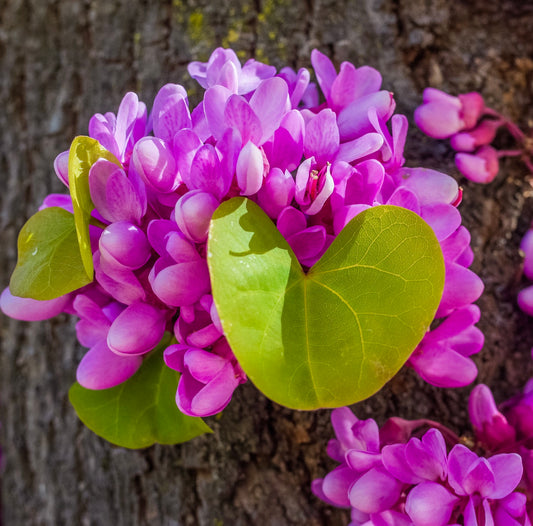
The genus Cercis, belonging to the Fabaceae family, embodies the beauty of renewal through its early-spring blossoms and elegant heart-shaped foliage. Native to North America, Europe, and Asia, these deciduous trees and shrubs are commonly known as redbuds, celebrated for their rosy-pink flowers that bloom directly on bare wood before the leaves emerge—a phenomenon known as cauliflory. With their delicate forms and vibrant hues, Cercis trees bridge the transition between winter stillness and spring vitality.
Species diversity and ornamental value
Among its most cherished members, Cercis canadensis, the Eastern redbud, defines woodland edges and gardens across North America with lavender-pink blossoms and broad, heart-shaped leaves. The Cercis occidentalis, or Western redbud, thrives in arid, sunlit slopes, its blooms glowing against silver bark and rugged terrain. The Cercis siliquastrum, known as the Judas tree, adds Mediterranean poise with magenta flowers and rounded crown, while Cercis chinensis offers compact elegance ideal for urban gardens. Cultivars such as ‘Forest Pansy’, ‘Ruby Falls’, and ‘Hearts of Gold’ expand the genus’s palette from deep purple to golden tones, uniting structure and color in living artistry.
Cultivation and garden character
Cercis thrives in well-drained soils and full to partial sun, preferring temperate climates with seasonal contrast. The redbud tree is hardy and adaptable, tolerating drought once established yet responding generously to regular watering in dry seasons. Ideal for small gardens, courtyards, and naturalistic plantings, it complements both formal and wild settings. Pruning after flowering maintains its graceful shape, while fallen petals enrich the soil below—a quiet cycle of renewal and beauty.
-
Blooms profusely in early spring before leaf emergence
-
Adapts to diverse soils and temperate climates
-
Ideal for small gardens and woodland edges
-
Offers exceptional color variation across species and cultivars
Symbolism and poetic essence
Across cultures, Cercis symbolizes rebirth, love, and transformation. Its heart-shaped leaves and sudden bloom after dormancy evoke emotional renewal and natural awakening. Whether the Eastern redbud glowing along woodland trails or the Judas tree brightening Mediterranean courtyards, Cercis remains a timeless expression of spring’s promise—subtle, radiant, and profoundly alive.