Hoya
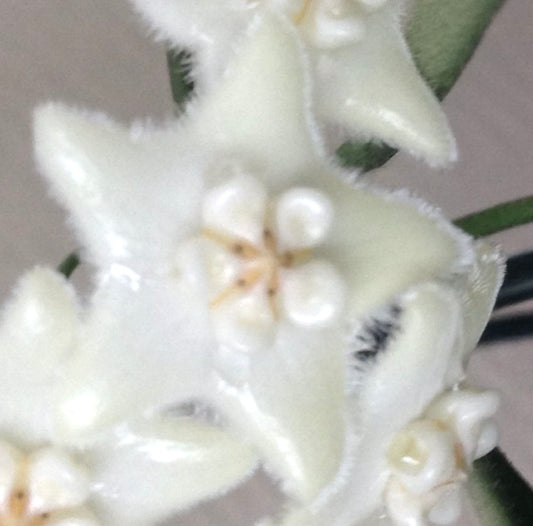
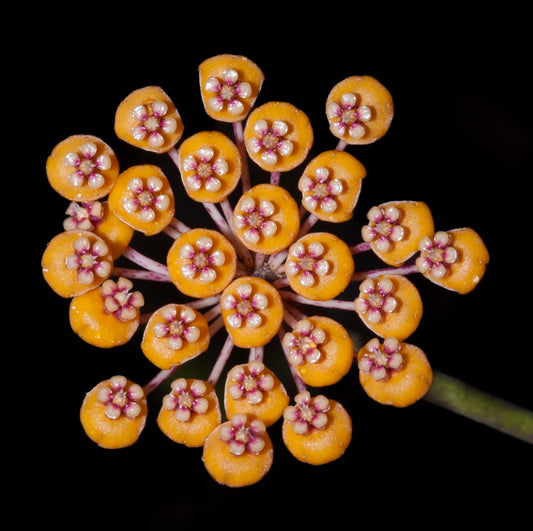
Hoya spans species such as hoya carnosa, hoya kerrii, hoya pubicalyx, hoya obovata, hoya australis, and hoya linearis, unified by waxy trailing foliage, vining evergreen form, and star-shaped porcelain flowers arranged in spherical hoya umbels. Rooted in epiphytic tropical habitat, Hoya blends geometric bloom structures with sweetly scented blooms, forming luminous botanical constellations.
-
Hoya soligamiana 35-50cm | Hoya soligamiana | Wax plant
Regular price €70,00Regular priceUnit price / perSale price €70,00Sold out -
Hoya stoneana 10-25cm | Wax plant | Porcelain flower
Regular price €60,00Regular priceUnit price / perSale price €60,00 -
Hoya stoneana 30-40cm | Hoya stoneana | Stone's wax plant
Regular price €70,00Regular priceUnit price / perSale price €70,00Sold out -
Hoya wayetii 10-40cm | Hoya wayetii | Wax plant
Regular price €60,00Regular priceUnit price / perSale price €60,00 -
Hoya wayetii 50-80cm | Hoya wayetii | Wax plant
Regular price €114,00Regular priceUnit price / perSale price €114,00Sold out -
Hoya waymaniae 10-15cm | Hoya | Wayman's hoya
Regular price €75,00Regular priceUnit price / perSale price €75,00Sold out -
Hoya waymaniae 5-10cm | Wax plant | Porcelain flower
Regular price €70,00Regular priceUnit price / perSale price €70,00
Hoya – The porcelain constellations of tropical canopies
Botanical identity and origin
Native to epiphytic tropical habitat across Southeast Asia and the Pacific, Hoya develops a vining evergreen form adapted to climbing trunks and filtering light through layered canopies. Its leaves, often marked by succulent textures and waxy trailing foliage, modulate hydration within humid yet fluctuating climates. Species such as hoya carnosa express the genus’s characteristic balance of resilience and delicacy, while Hoya as a whole forms complex aerial networks that capture moisture and channel it through fine vascular systems.
Species diversity and ornamental resonance
Variation within Hoya spans the heart-shaped leaves of hoya kerrii, the mottled surfaces of hoya pubicalyx, and the broad ovals characteristic of hoya obovata. Meanwhile, hoya australis and hoya linearis extend the genus’s chromatic and textural breadth. Central to all forms are star-shaped porcelain flowers, borne in spherical hoya umbels that display layered translucence and shifting pastel tones. Across this spectrum, Hoya integrates fragrance, geometry, and adaptability into a coherent botanical vocabulary.
Cultivation and landscape adaptability
In cultivation, Hoya thrives in airy substrates, bright filtered light, and irrigation cycles reflecting its epiphytic tropical habitat. Species such as hoya carnosa tolerate drier intervals, while sweetly scented blooms appear in rhythm with temperature and daylength. The genus’s vining evergreen form allows graceful integration into suspended plantings, trellises, and interior botanical frameworks.
-
Leaves catching fragmented tropical light
-
Umbels unfolding with geometric precision
-
Vines tracing subtle architectural arcs
-
Seasonal cues guiding fragrance and bloom
Symbolic synthesis and aesthetic meaning
Ultimately, Hoya embodies a poetics of suspension and radiance, where foliage and bloom converge in delicate equilibrium. Through species such as hoya kerrii and hoya pubicalyx, the genus expresses a quiet constellation-like elegance shaped by humidity, elevation, and filtered luminosity. In its intricate umbels and enduring leaves, Hoya stands as a botanical emblem of tenderness framed within structural clarity.
Collections
-
Books & Readings
Books and Readings: Discover the World of Plants Through Pages Why Read...